
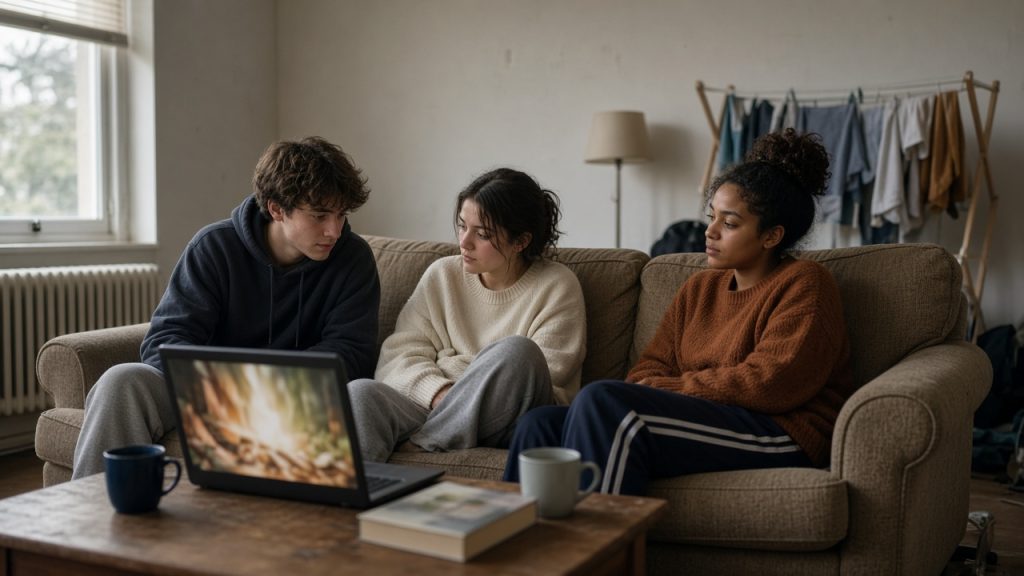
It’s mid-November, and a TV Licensing letter has landed on the shared-house mat. Everyone looks at everyone else, and someone says they don’t need one because they only watch on a laptop.
If you’re wondering whether you need a TV licence as a student, the short answer is this: you need one to watch or record live TV, or to use BBC iPlayer, on any device. The rules follow your tenancy, not whether you own a telly. Check whether you actually need one, and whether the house is already covered, before you pay.
What are the quick wins?
- Check whether you actually watch live TV or use iPlayer. If you only use on-demand services and never do either, you don’t need a licence.
- Check if a joint tenancy already covers the house, or if halls shared areas are already covered, before you buy another one.
- Don’t cancel a term-time licence just because you’re going home for Christmas, if you’ll watch again in January.
- If you don’t need one, tell TV Licensing. If you do need one and can’t pay in one go, you can spread the payments. That doesn’t cut the total.
Do I need one if I don’t have a TV?
Yes, if you watch or record live TV, or use BBC iPlayer, on a laptop, phone, tablet or console. GOV.UK is clear that it’s about what you watch, not the box in the corner. A letter can still arrive at a student address even if the only screen in the room is a laptop.
If you never watch live TV and never use iPlayer, you don’t need a licence. No telly in your room doesn’t get you off the hook if iPlayer is open on your laptop.
What about iPlayer, Netflix and YouTube?
BBC iPlayer needs a licence, whether you’re watching live or catch-up. Citizens Advice, in its advice for England, says the same: anything on iPlayer counts, including catch-up, on any device.
You don’t need a licence for on-demand services such as Netflix, Disney+, All 4 and Prime Video, or for ordinary YouTube videos and DVDs, as long as you’re not watching live TV.
Live TV on a streaming service is different. A subscription does not replace a licence if someone in the house is watching live TV or iPlayer. That’s worth keeping in mind with NOW, if you stream TV in the house, or if you’re looking at Sky student deals, Virgin Media TV and broadband, or other student TV and broadband deals. YouTube Premium is the same: paying for a subscription doesn’t change the licence rules.
The late-night iPlayer episode still counts.
What if I live in halls?
If you’re in university accommodation, you need a licence to watch in your own room. Shared areas, such as a communal lounge, may already be covered. That cover doesn’t automatically follow you down the corridor.
Check with your halls or accommodation office before you assume either way. Ask who holds the licence for the lounge, and don’t treat that as cover for a laptop in your room. If you only watch in a covered shared area, and never watch live TV or iPlayer in your room, you may not need your own. If you watch in your room, you do, unless the narrow rule about a licence at home applies.
What if I live in a shared house?
One licence can cover the household if you have a joint tenancy, or you only watch in a single shared area. If you have separate tenancy agreements and you watch in your own room, you need your own licence.
Get new student deals first
One email a week with fresh deals and money tips. Unsubscribe any time.
Join freeA joint tenancy is usually one agreement that everyone in the house has signed. Separate agreements are more likely if you each signed for your own room. If you’re not sure, read the contract or ask your landlord or agent, rather than guessing from how the bills are split.
Don’t just trust the housemate who thinks someone already sorted it. Look at the actual tenancy, ask what’s already in place, and only then decide whether another licence is needed.
Can I use my parents’ licence at uni?
Only in the narrow way GOV.UK sets out. If the address you live at outside term time has a licence, you can use it at university on a device that is battery powered, not plugged in, and not connected to an aerial. All three of those conditions apply.
The bit people miss is the plug. A laptop on charge, or a phone plugged into the wall, is not covered by this rule. If you want to rely on a licence at home, keep the device on its battery, and don’t attach it to an aerial. If there isn’t a licence at that out-of-term address, this exception doesn’t help you.
Can I get a refund if I go home for Christmas?
Usually not. TV Licensing only refunds a licence if you won’t need it again before it expires and there’s at least one complete unused month left on it. If you’ll be back watching live TV or iPlayer in January, a few weeks at home doesn’t qualify, so keep it running. Cancelling for a short break is not a shortcut.
The better moment is the end of the academic year. TV Licensing says students can apply for a refund for any unused months then, as long as there’s at least one complete month left. Refunds are worked out in whole unused months, and you can apply up to 14 days before the date you stop needing it. The detail is on the TV Licensing cancellations and refunds page.
What if I can’t afford it?
If you need a licence, pay for it, or set up a way to spread the cost. Watching or recording live TV, or using iPlayer, without one is a criminal offence. You can be fined up to £1,000.
You can spread the payments. Citizens Advice is clear that this does not reduce the total, but it can make it easier to afford. There’s no student discount on a TV licence, so don’t go hunting for one. If you’re sure you don’t need a licence, tell TV Licensing you don’t need one, rather than ignoring a letter.
Check first, then pay only if you need to, and only if the house isn’t already covered. That’s how you avoid paying twice, or watching without cover.
Last checked: 15 November 2026.