
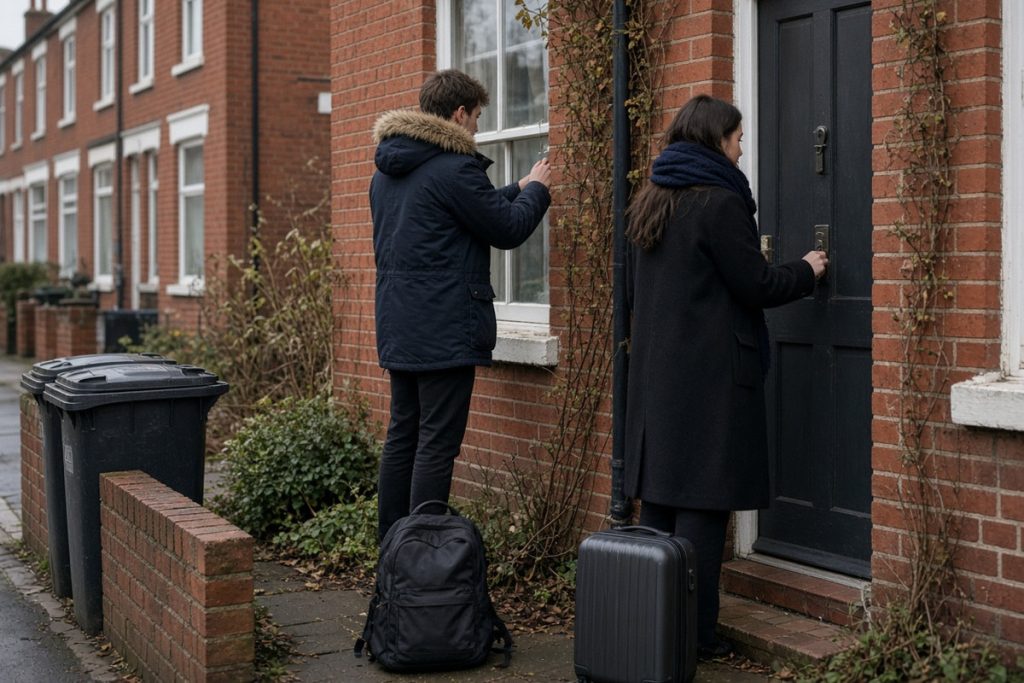
By mid-December the student street goes quiet. Laptops are still on desks, pizza boxes sit in the recycling, and a pile of post starts to build up behind the door.
To leave your student house safe over Christmas, take the valuables you cannot afford to replace, check your insurance before you go, and lock the house properly. Don’t announce an empty house on public social media.
What are the quick wins?
- Check whether a parent’s home or contents policy already covers you. It is not automatic, so read the wording, or ask them to check with the insurer.
- Take your laptop, phone and other high-value items home with you.
- Lock every door and window, hide keys from the letterbox, and put anything left behind out of sight.
- Ask a trusted neighbour to take in post, parcels and bins.
- Use a timer for lights if you can, so the house does not look empty after dark.
- For heating, frozen pipes and meter readings, read our guide on whether to leave the heating on over Christmas rather than guessing.
Once you’ve sorted getting home for Christmas cheaply, give yourself ten minutes for a proper lock-up before you go.
Am I already insured, or do I need my own policy?
MoneyHelper says it is easy to skip insurance to save money, then asks whether you could afford to replace a phone or laptop if it went. That’s the right question to ask before you buy anything.
Start with a parent’s home or contents policy. You might already be covered while you are at university, or they may be able to add you for a fee. You might not be. The wording varies. You might need to be named on the policy, and cover can change when you go home for the holidays. Nobody should assume they are covered. Ask them to check the wording, or to call the insurer, before you leave.
If that policy does not cover you, consider your own contents cover for the things you would struggle to replace. A landlord’s buildings insurance covers the structure of the house, not your belongings. Contents cover is optional, but without it you pay to replace stolen or damaged items yourself. The official MoneyHelper page on insurance when you are renting is a clear place to start.
In a shared house, many insurers want a lock on your bedroom door if you take out your own policy. If you live in halls, do not assume the halls policy covers your stuff. Check the wording yourself, or ask the halls team what is and is not included.
The laptop you wrote your last essay on is worth more than the three mugs and a fairy-light tangle you’d barely notice were gone.
What should I check on the policy before I go away?
Some policies limit how many days a home can be left unoccupied and still be covered. There is no single standard number, so check the unoccupied or empty-property conditions on your own policy. Check what counts as theft too, for example whether you need signs of forced entry.
If you are taking gadgets home, check any personal-possessions rules for items away from the student house. A policy that covers a laptop in your room may treat it differently on a train.
If anything is unclear, ask the insurer before you leave, not after a claim. That conversation is a lot calmer when nothing has gone missing.
How do I lock up a student house for the Christmas break?
Follow the police.uk checklist for leaving your home. Close and lock all doors and windows, even the bathroom one you only open to let the steam out. Double-lock doors. Keep valuables out of sight. Hide keys, including car keys, away from letterboxes and cat flaps. Lock side gates, sheds and garages. Lock bikes inside, to a robust fitting.
Derbyshire Police’s student guide also says to take valuables home, take down obvious student signs in the windows, and ask a neighbour to put the bins out and take them in. Divert parcels to a neighbour or the family home, because a stack of boxes shows that nobody is in.
If you’re packing a laptop and clothes for the trip, look at sturdy boxes if you’re packing valuables to take home. The “hidden” key under the plant pot is not a secret. Every delivery driver on your street has watched someone use it.
Should I post that I’m going home?
Keep social posts to friends rather than making them public, as police.uk advises. A story about the first train home, tagged with your student street, is a useful tip for the wrong person.
Leave lights and a radio on a timer so the house looks occupied. You can look at Wickes for a simple light timer or a better lock, if your landlord agrees. There are also home and garden deals if you need something small for the lock-up. Do not fit extra locks, cameras or alarms without the landlord’s say-so if the tenancy restricts alterations.
Ask a trusted neighbour to keep an eye on the place, and to close curtains after dark if they can. Cancel anything that would pile up on the doorstep.
What about fire, food and the tenancy?
Mid and West Wales Fire Service says to turn off and unplug electricals you do not need, turn off gas appliances that do not need to run, close internal doors, and check the smoke alarms work. A fridge still counts as something you need, so leave that one running.
Do not turn the water off at the mains as a default winter tip. In a rented student house in December, that can clash with keeping some heat on to protect the pipes. Check your tenancy, or ask the landlord, what they want you to do with the heating and the water. The energy detail is in the winter energy guide above, so I won’t go over it again here.
Clear out food that will spoil. The smell when you open the fridge in January will be a problem for future you. Agree who holds a spare key in case of a leak or another emergency, and make sure someone knows how to get in if the landlord or a neighbour needs to.
A careful lock-up also helps protect the deposit, if an unlocked door or an ignored leak leads to a bill you could have avoided. Do the insurance check this week, pack the laptop when you pack your bag, and walk the house once before you shut the door.