
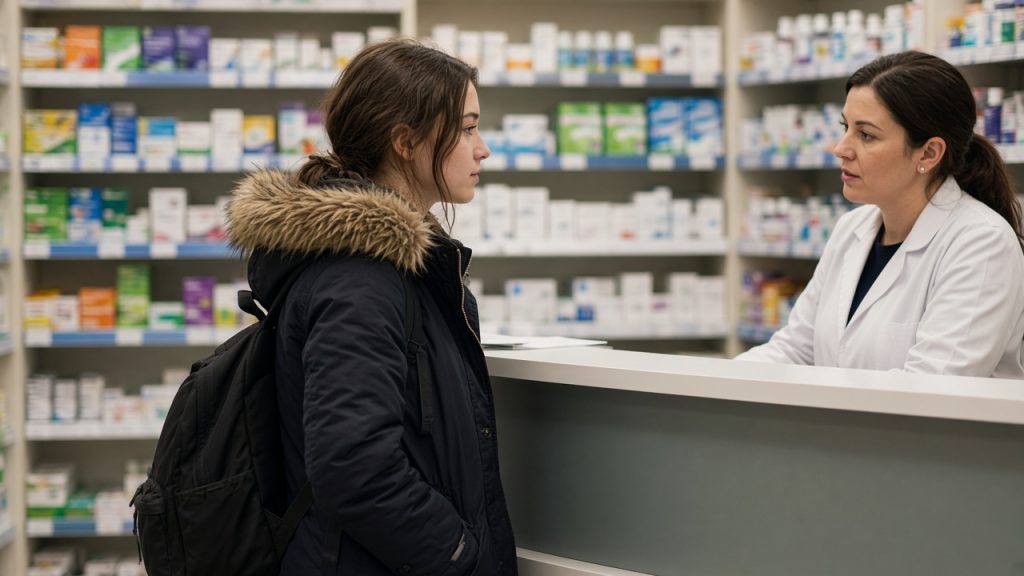
It’s the point in term when someone in the house is putting off a dentist appointment, or leaving a prescription on the side, because the January loan is still weeks away.
Check your age and which UK nation you live in first. In England, being a student does not automatically make NHS costs free once you turn 19. If your income is low, you can apply to the NHS Low Income Scheme.
What are the quick wins?
- Check whether you already get help because of your age, where you live, or a parent or guardian’s benefits claim.
- If you’re 19 or over in England, look at the Low Income Scheme before you pay for a prescription, a dentist visit or an eye test.
- If you have already paid, you may still be able to claim a refund when you apply.
- Use the official NHSBSA pages or the GOV.UK checker for help with NHS costs, not a random form you found on social media.
Do students automatically get free NHS prescriptions?
No, not everywhere, and not at every age. In England, if you’re 18 or under and in full-time education, you already get free NHS prescriptions, dental treatment and sight tests, plus help towards glasses or contact lenses.
From 19, that automatic help stops unless you qualify another way. Being a student is not, by itself, an exemption. You might already get help if you’re included in a parent or guardian’s claim for certain benefits, or if you get a qualifying benefit yourself. Use the official list rather than guessing, because not every benefit counts, and some older ones no longer do.
If you live in Wales, Scotland or Northern Ireland, the rules are different. There’s a short section on that below.
What is the NHS Low Income Scheme, and what is an HC1 form?
It’s a means-tested scheme that can help with NHS prescription charges, dental treatment, sight tests, glasses or contact lenses, travel to NHS treatment, and NHS wigs and fabric supports.
If you get full help, you’ll get an HC2 certificate. If you get partial help, you’ll get an HC3 certificate, which shows how much you have to pay.
Many people can apply online through the official NHSBSA service. If you cannot apply online, you complete an HC1 form and post it with evidence. Students need to send award notices for any grants and bursaries, and a copy of the student-loan financial assessment, even if you did not take the loan. If you work as well, you’ll need proof of your earnings too.
What if I live in Wales, Scotland or Northern Ireland?
Don’t assume the England process is the same. Check your own nation before you pay.
If you live in Scotland, NHS prescriptions, sight tests and dental check-ups are already free. NHS dental treatment is also free if it starts before your 26th birthday. You can still apply for help with glasses or contact lenses, and with dental treatment that starts on or after your 26th birthday.
If you live in Wales, NHS prescriptions are already free, and dental check-ups are free if you’re under 25. You can still apply for help with dental treatment, sight tests, glasses or contact lenses, and travel to NHS treatment.
If you live in Northern Ireland, all prescriptions dispensed there are free, including medication, wigs and surgical appliances. For dental treatment, sight tests, glasses or contact lenses, and travel, you may still need to apply. Use an HC1 from nidirect’s help with health costs page, or get one from a local Jobs and Benefits office, then post it or hand it in there. You will not get that help until the form is accepted. Successful claims get an HC2 or HC3 certificate, usually for 12 months.
How do they treat my student loan?
NHSBSA assesses students on the whole amount of loan available to you. That includes the income-related and non-income-related parts, and any parental contribution, whether or not you took the full amount out.
If you did not take the full loan, they may ask how you are paying essential bills. If the loan is already feeling tight before Christmas, our guide to what to do when your student loan is running low is worth a read, but it does not replace an application for help with NHS costs.
If you have a bursary as well as a loan, start with the official online application and have your bursary award notice and student-loan financial assessment ready. If the service says you need to apply by post, use an HC1 and send that evidence with the form.
What if I have already paid?
You can apply for a refund at the same time as you apply for the scheme. Refund claims must arrive within 3 months of the date you paid, or of your sight test.
For a prescription refund, you need an FP57. Ask for it when you pay, not later. For other costs, including dental treatment, sight tests, glasses or contact lenses, travel, and wigs, use the relevant HC5 form. The official NHS.uk Low Income Scheme page has the refund forms.
How do I apply?
Start with the official NHSBSA guide for students, or the GOV.UK checker, and apply through the NHSBSA service if you can.
You cannot apply online if you live in Northern Ireland, if you’re a student with a partner who lives with you, or if you have no income. Savings can also affect whether you can apply online, or apply at all, so check the limits on the official NHS Low Income Scheme page rather than guessing.
If you cannot apply online, complete an HC1 and post it with your evidence. In England you can order or download the form from NHSBSA. In Scotland you can download the Scotland HC1, or get one from Jobcentres, GP practices, pharmacies and Citizens Advice. In Wales, download the form from the Welsh Government HC1W page, or call 0345 603 1108 and choose health publications. Send completed English, Scottish or Welsh applications to NHS Help With Health Costs, Unit 5, Greenfinch Way, Newcastle upon Tyne, NE15 8NX. That is not a freepost address, so you’ll need a stamp. The details are also on NHSBSA’s page about what to do if you cannot apply online.
The helpline is 0300 330 1343. NHSBSA usually assesses applications within 18 working days. Certificates for these applications usually last between 6 months and 5 years, depending on your circumstances.
A shop deal does not replace this help. If you still need everyday pharmacy bits, or you’re buying contacts while you wait for a decision, there are Boots if you need pharmacy or everyday health bits, Pharmacy2U for health and pharmacy orders, and Vision Direct for contact lenses. There are more student health and beauty deals if you’re already shopping around.
Don’t assume student status covers your NHS costs, and don’t pay first and hope. Check what is already free where you live, then apply before a dentist, an optician or a run of winter prescriptions if you need the scheme.
Last checked: 17 November 2026, against the official NHSBSA Low Income Scheme pages, NHS.uk, GOV.UK, NHS Inform, GOV.WALES and nidirect.